Gymnastics and calisthenics classes in Marrakech. Muscle-ups, handstands, ring dips and bodyweight progressions at Dune Training Gueliz.
Want to try?
Your 1st session here to guide you through every exercise.
The muscle-up. The handstand. Ring dips. The front lever. These are the movements people admire on social media and almost nobody actually masters. Not because they require freak genetics. Because they demand progressive learning, patient coaching, and access to the right equipment. At Dune Training in Marrakech, we built a dedicated Gymnastics class to help you progress on these skills, step by step, at your own pace.
Gymnastics in the fitness context is not the Olympics. We are not talking about backflips or balance beams. We are talking about body control: moving your own weight through space with precision, building relative strength, sharpening coordination and proprioception. Calisthenics is the art of bodyweight strength. The two disciplines overlap and complement each other perfectly. And when you combine them with CrossFit or HYROX training, you build a genuinely complete athlete.
What the Gymnastics Class Covers
The Gymnastics class at Dune Training covers several movement families. Pulling: strict pull-ups, kipping pull-ups, chest-to-bar, bar muscle-ups, ring muscle-ups. Pushing: handstand push-ups, ring dips, parallette push-ups, L-sits. Inversions: handstand hold against the wall, handstand walk, freestanding handstand. Ring skills: skin the cat, false grip development, progressive ring rows, ring muscle-ups. Each family has its own progressions, from complete beginner to advanced gymnast.
A typical class runs 60 minutes. We start with 10 to 15 minutes of specific warmup: wrist mobility (critical for handstands), shoulder activation with resistance bands, hollow body holds to fire up the core, and some swing work on the bar or rings. The warmup in a gymnastics class is longer than in a standard strength session because the joints are under more stress. wrists, elbows, shoulders all need proper preparation before you load them.
The Progression System
Gymnastics does not progress like weightlifting. You do not add 2.5 kg every week. Progress happens through qualitative steps. For the bar muscle-up, the progression looks like this: solid strict pull-up (minimum 5 reps), strict chest-to-bar, hip-to-bar with kipping, transition drill over the bar with band assistance, and finally the full muscle-up. Each step can take weeks or months. It is patient work, and the coach is there to tell you exactly where you stand and which drills to practice.
The handstand follows a similar path. Wall walks to get into the inverted position, handstand hold facing the wall (stomach toward the wall, not back to it. that distinction matters for posture), then gradually pulling one hand off with the other as contact, and eventually a freestanding hold. The handstand walk actually comes after and is easier than the static hold because you use motion to maintain balance. Most people can hold a wall handstand within 4 to 6 weeks. Freestanding takes longer, typically 3 to 6 months of consistent practice.
Specialized Equipment
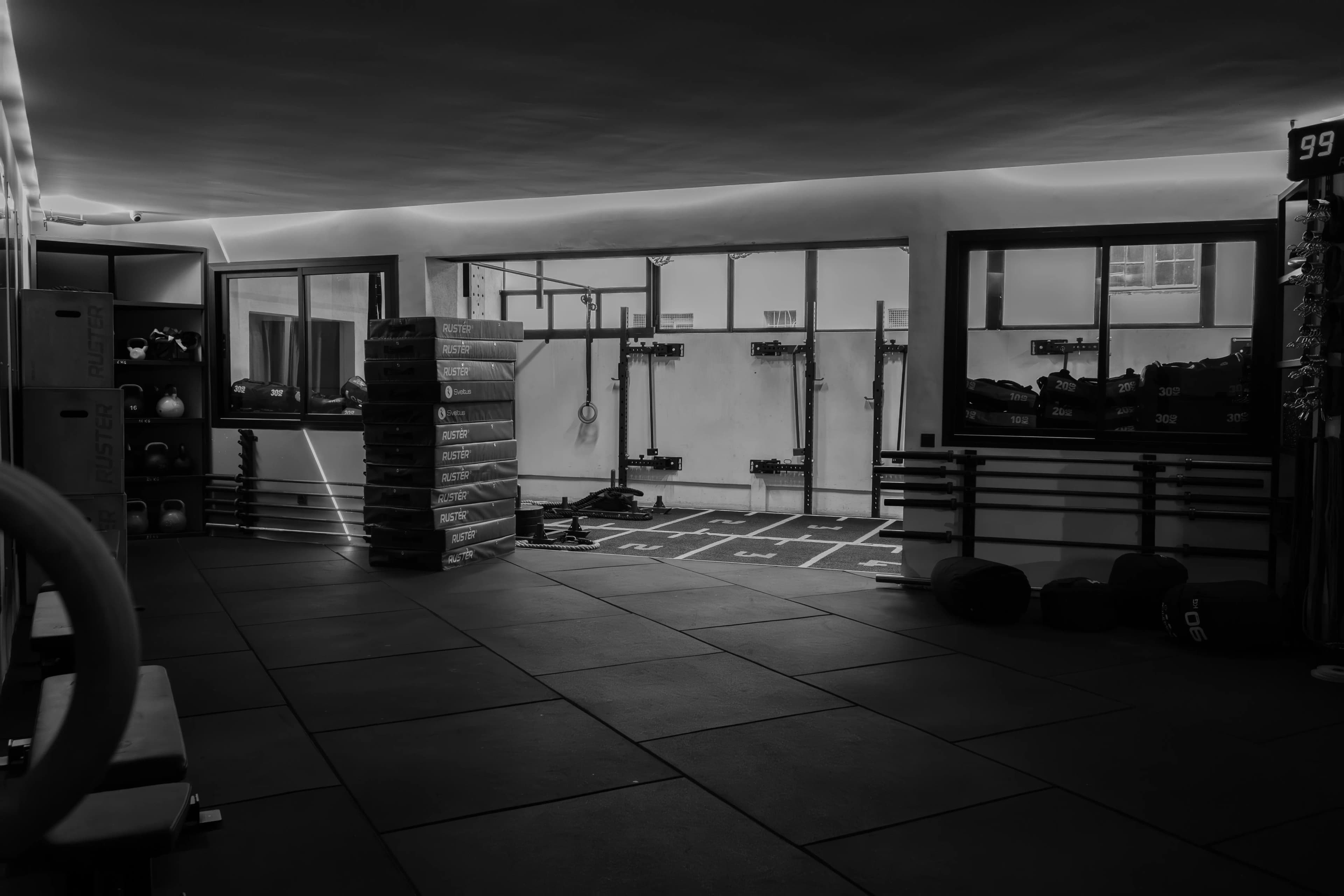
A quality gymnastics class requires specific gear. At Dune Training, we have height-adjustable gymnastics rings (essential for muscle-ups and ring dips), pull-up bars at multiple heights, wooden parallettes (better than metal for grip and wrist comfort), resistance bands at various strengths for assistance, a smooth wall section for handstand work, and thick rubber flooring to cushion falls. This equipment is rare in Marrakech. it is an investment that few gyms make.
The parallettes deserve a special mention. They are small horizontal bars sitting about 30 to 40 cm off the ground. They enable L-sit work, planche progressions, handstands, and elevated push-ups in ways that are impossible to replicate on the floor. The wooden grip reduces wrist stress compared to working on flat ground. If you have sensitive wrists. common for anyone who spends their day at a computer. parallettes quickly become your best friend in the gym.
Gymnastics and CrossFit: The Winning Combination
If you do CrossFit, you know that gymnastics movements make up about a third of all WODs. Toes-to-bar, pull-ups, muscle-ups, handstand push-ups. they show up constantly. And gymnastics is often the bottleneck. People have the strength for deadlifts and cleans but cannot string together 10 kipping pull-ups without breaking rhythm, or they lose huge chunks of time on toes-to-bar because their kip technique is off.
The Gymnastics class is the perfect complement to CrossFit. You work specifically on the skills you are missing, with detailed progressions and individual coaching. The payoff: when the WOD includes pull-ups or handstand push-ups, you no longer slow down. You flow through them. And that changes your overall performance dramatically. We have members who shaved 3 to 4 minutes off their benchmark WODs simply by improving their gymnastics technique in a dedicated class.
Gymnastics and HYROX: Is It Useful?
HYROX does not include gymnastic movements directly. no pull-ups or muscle-ups on race day. But gymnastics builds physical qualities that transfer indirectly. The deep core control from L-sits and hollow body work improves your running posture and your power output on the sled push. The pulling strength developed on rings helps with sled pull. The coordination built through handstand practice improves overall motor efficiency. The transfer is indirect but very real.
Who Is It For?
The Gymnastics class is open to all levels. If you have never done a pull-up in your life, we start with ring rows and band-assisted pull-ups. If you already do muscle-ups and want to work toward a handstand walk, we give you the drills to get there. The coach adjusts in real time. That is the advantage of groups capped at 12. every person works at their level with individualized feedback.
We see a lot of women in the Gymnastics class, by the way. Contrary to the stereotype, gymnastics is not a muscular guy thing. Relative strength. strength proportional to bodyweight. often favors lighter people. And handstands, L-sits, and ring dips do not require massive muscle mass. They require control, technique, and patience. Qualities anyone can develop regardless of starting point.
Schedule and Pricing
The Gymnastics class runs multiple times per week at Dune Training, 60 Avenue Mohammed V in Gueliz. Check the app or website for current times. The class is included in the 800 MAD monthly membership. no extra charge. Session packs of 5 and 10 are also available. And your first class is always free.
If you have always wanted to do a muscle-up or hold a handstand but had no idea where to start, come try the class. The coach will do a quick assessment of your current abilities and place you on the right progression track. From there, every week you will see concrete improvement. It is slow, it is demanding, but when you land your first muscle-up, you understand why it was worth every session.
This is a realistic progression timeline based on what we see with most members. Month 1: you go from zero pull-ups to 3 to 5 strict pull-ups with solid form. You hold a wall handstand for 30 seconds. You nail your first clean ring rows. Month 3: you string together 8 to 10 strict pull-ups, you start muscle-up attempts with band assistance, and your wall handstand exceeds one minute. Month 6: ring muscle-ups arrive for those who show up consistently, handstand walks covering 5 to 10 meters become realistic, and ring dips feel smooth and controlled. These are not marketing promises. they are patterns we observe every training cycle with members who attend the Gymnastics class at least twice per week.
The gymnastics rings deserve extra attention because they are the single piece of equipment that separates a real gymnastics program from a basic pull-up bar setup. Rings move freely in every direction, which forces your body to stabilize through every rep. A ring dip recruits significantly more muscle fibers than a bar dip because your shoulders, chest, and core are constantly working to prevent the rings from drifting apart. At Dune Training, our rings are height-adjustable with graduated straps, letting the coach set them low for ring rows, medium for dips, and high for muscle-ups and skin the cats. all within the same class without wasting transition time.
Gymnastics has a direct carryover to other sports, even ones that seem completely unrelated. Climbers gain pulling strength and body awareness that translates straight to the wall. Surfers improve their pop-up speed through parallette pushing drills. Runners build deeper core stability that holds their posture together over long distances. Even golfers benefit from the shoulder mobility and thoracic rotation work that comes with ring training and handstand practice. If your main sport is not gymnastics, think of it as the skill multiplier that makes everything else better.
One of our members, a weekend rugby player, credits ring work with transforming his tackling. His ability to stabilize under unstable conditions. exactly what rings teach. improved his contact game within two months. Another member who runs trail races in the Atlas Mountains says the hollow body and L-sit strength from gymnastics class fixed the lower back pain she used to get after 20 km. These are not coincidences. When you develop true body control and relative strength, every physical activity you do gets an upgrade. That is the hidden value of gymnastics training that most people only discover once they start.