A beginner strength training plan for women: 3 full-body gym workouts a week, sets, rest times and an 8-week progression from Dune Training, Marrakech.
Ready to put it into practice? Discover Dune Training for women.
Want to try?
Your 1st session here to guide you through every exercise.
At Dune Training in Gueliz, Marrakech, we often see the same thing with new members: they hesitate during their first couple of sessions. They aren't sure what their level is, or whether they'll keep up. By the second week, that usually changes. Groups are capped at 12, the coaches adapt each exercise to the person doing it, and the other members cheer them on. Women who started with an empty bar end up squatting 50 to 60 kg (about 110 to 130 lb) four months later.
This is an 8-week beginner gym workout plan for women, three days a week. It borrows specific rules from our classes. The sets of 10 to 15 reps and the 60 to 90 seconds of rest come from Booty Builder. The 8 to 10 minute warm-up on the rower or assault bike, adding 2.5 kg a week and the deload week every 4 weeks come from Iron Muscle. The rest is a full-body plan built for beginners, which you can follow on your own or with our coaches, as we offer on our Women page.
Why strength training matters for women
The NHS advises adults to do strengthening activities on at least 2 days a week, working the legs, hips, back, abdomen, chest, shoulders and arms (NHS). Three spaced-out sessions put you above that minimum.
Lifting also strengthens your bones and tones your shape. What our members mention most, though, is the confidence that comes with getting stronger. Every one of them describes it as a real turning point.
"I don't want to get bulky"
This is the worry we hear more than any other. Lifting heavy won't make you bulky: female physiology doesn't allow women to build muscle mass the way men do without chemical help.
Here is what our coaches see in Gueliz. On average, members who train 3 to 4 times a week see visible results within 6 to 8 weeks. And women who started with the empty bar squat 50 to 60 kg after four months.
How to set up your 3 days a week
For a beginner, full-body training is the easiest option: you work your whole body every session. You repeat each movement three times a week, so you learn it faster than on a split where each muscle group gets one day.
Leave a rest day between sessions. Monday, Wednesday, Friday works well, and so does Tuesday, Thursday, Saturday.
The three workouts (A, B and C) are different. Do A, then B, then C, and start again the next week. Plan on about an hour per session, warm-up included.
Rules for every session
- Warm up for 8 to 10 minutes: easy rowing or assault bike, then a few activation drills (banded glute bridges, lateral band walks, bodyweight squats).
- 3 sets of 10 to 15 reps per exercise.
- 60 to 90 seconds of rest between sets.
- The right weight: the last rep feels hard but still clean. If your form breaks down before rep 10, it's too heavy.
- Cool down with a few stretches for your legs, back and shoulders.
The plan: workouts A, B and C
Workout A: squat and push
| Exercise | Sets x reps | Muscles worked |
|---|---|---|
| Goblet squat (dumbbell or kettlebell held at your chest) | 3 x 10-15 | Quads, glutes |
| Dumbbell bench press | 3 x 10-15 | Chest, shoulders, triceps |
| Lat pulldown (high cable) | 3 x 10-15 | Back, biceps |
| Hip thrust | 3 x 10-15 | Glutes |
| Dead bug | 3 x 10-15 per side | Core |
Workout B: hinge and pull
| Exercise | Sets x reps | Muscles worked |
|---|---|---|
| Dumbbell Romanian deadlift | 3 x 10-15 | Hamstrings, glutes, lower back |
| Seated dumbbell shoulder press | 3 x 10-15 | Shoulders, triceps |
| One-arm dumbbell row | 3 x 10-15 per arm | Back, biceps |
| Box step-up | 3 x 10-15 per leg | Quads, glutes, balance |
| Cable Pallof press | 3 x 10-15 per side | Core, anti-rotation |
Workout C: legs and upper body
| Exercise | Sets x reps | Muscles worked |
|---|---|---|
| Leg press, feet high on the platform | 3 x 10-15 | Glutes, hamstrings, quads |
| Bulgarian split squat (bodyweight, then dumbbells) | 3 x 10-15 per leg | Quads, glutes |
| Incline push-up (hands on a bench) | 3 x 10-15 | Chest, triceps, core |
| Seated cable row (low cable) | 3 x 10-15 | Back, rear shoulders |
| Hip abductor machine | 3 x 10-15 | Glute medius |
New to an exercise? Start with an empty bar or the lightest weight and ask a coach to check your position. A badly set-up hip thrust or Romanian deadlift won't work the right muscles.
How to progress over 8 weeks
If you always lift the same weight, your body has no reason to change, so the loads need to go up bit by bit. At Dune, our strength programs run in 6 to 8 week cycles. Here is how to lay out yours.
| Weeks | Goal | What you do |
|---|---|---|
| 1 to 3 | Learn the movements | Light weights, strict form, log your numbers |
| 4 | Lighter week | Same exercises, less weight |
| 5 to 7 | Add weight | Go up as soon as you hit the 15-rep rule |
| 8 | Lighter week | Recover before a new cycle |
The 15-rep rule
Once you can do 3 clean sets of 15 reps on an exercise, add the smallest weight jump available and drop back to 10 reps. Then build back up to 15 and repeat.
In Iron Muscle, the coach logs your numbers every session and helps you add 2.5 kg (about 5.5 lb) a week when your form allows. Smaller exercises need smaller jumps: the gym has 0.5 kg and 1 kg fractional plates, and dumbbells starting at 2 kg (about 4.4 lb).
A lighter week every 4 weeks
Iron Muscle schedules a deload week every 4 weeks so your body can recover. You still show up and practise technique, just with less weight.
Log everything
A notebook or a note on your phone will do: date, exercise, weight, reps. That's how you know when to go up, and watching your numbers climb week after week keeps you going.
What about cardio?
Lifting doesn't replace aerobic exercise. The NHS also recommends at least 150 minutes of moderate-intensity activity a week, or 75 minutes of vigorous activity (NHS).
Brisk walks on your days off from lifting are an easy place to start. If you'd like a format that mixes running and strength, read our guide to HYROX. And if you run, our Marrakech Marathon 2027 strength plan pairs well with this one.
Common beginner mistakes
- Adding weight too fast. Form first, load second.
- Skipping the warm-up, when ten minutes is enough.
- Switching programs every week. Stick with one plan for a full cycle so you can see your progress.
- Only using machines. They're useful, but free weights also train balance and core stability.
- Training two days in a row at the start instead of leaving a rest day in between.
Train alone or with a coach?
You can follow this plan on your own. In the first few weeks, though, a second pair of eyes helps a lot: someone who fixes your back position on a deadlift or your squat depth before bad habits set in.
Our coach Izza specialises in strength training and physical preparation. She teaches Booty Builder and Athletic Core, and runs personal training sessions if you want a plan built around you. You'll find her on our Women page, with a "Book with Izza" button.
In Gueliz, you can also do this work in small-group classes capped at 12 people:
- Booty Builder: 60 minutes on glutes and legs. Ten minutes of glute activation, a 40 to 45 minute main block (hip thrusts, squats, Bulgarian split squats, Romanian deadlifts, high-foot leg press), then stretching. Beginners start with light loads, and the coach adjusts your position on every movement.
- Athletic Core: core bracing, abdominal strength and trunk stability.
- Iron Muscle: targeted strength training with progressive loads. This one works one or two muscle groups per session, at 3 to 4 sets of 8 to 12 reps, so it's a good next step once the full-body basics feel solid.
On the current timetable, a typical week could be Booty Builder on Monday, Athletic Core on Wednesday and Booty Builder on Friday. Prefer your own pace? Open gym runs Monday to Friday from 1:30 pm to 5:30 pm, and you can work through workouts A, B and C there.
Equipment at the gym
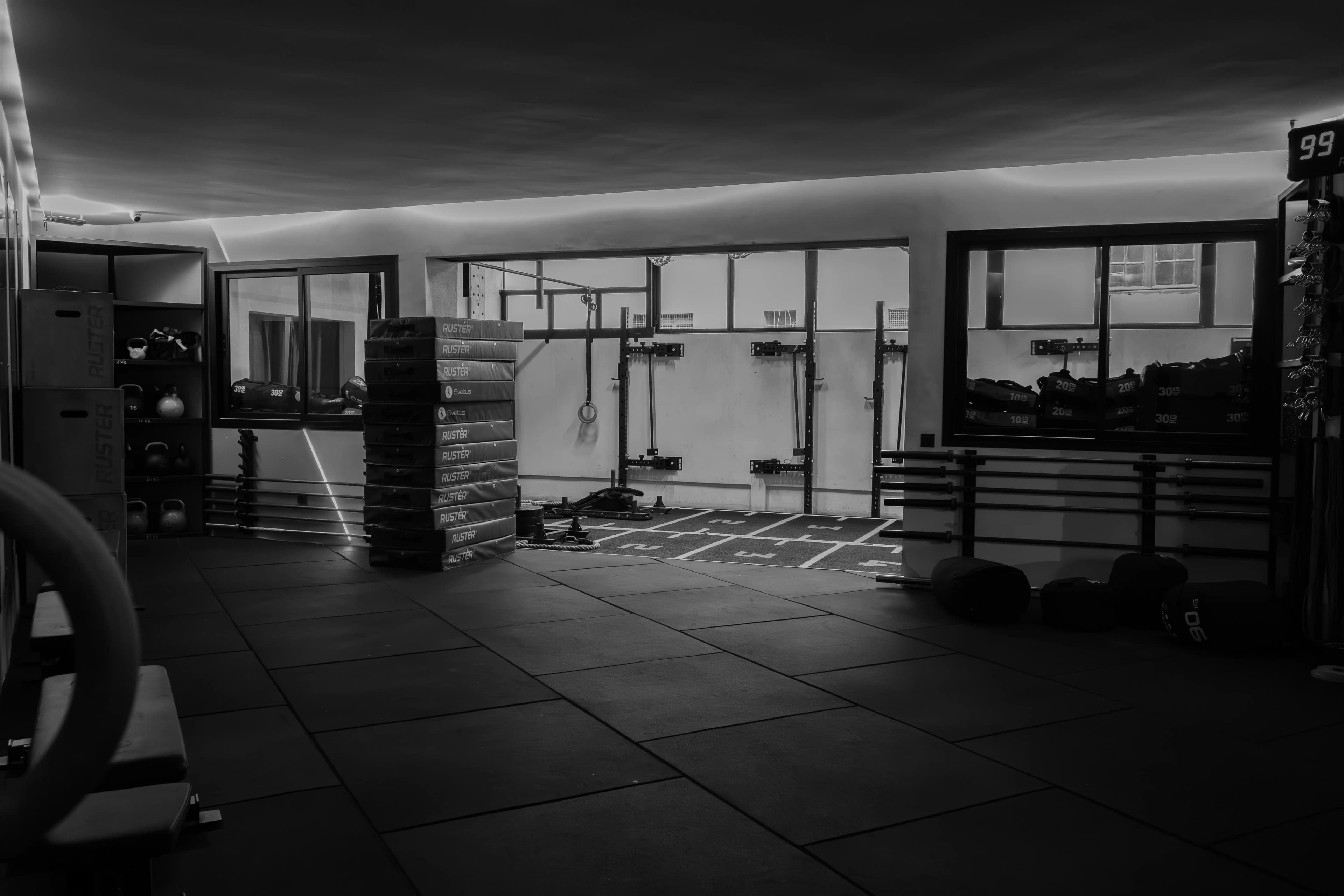
Everything this plan needs is there: dumbbells from 2 to 50 kg, kettlebells from 4 to 48 kg, Olympic barbells (including 25 mm women's bars), a squat rack with adjustable safety pins, and high and low cables. The full list is in our article on weight training gyms in Marrakech.
FAQ
How many days a week should a beginner woman lift weights?
The NHS recommends strength work on at least 2 days a week. Three full-body sessions, as in this plan, help you learn the movements faster while still leaving a rest day in between.
How long before I see results?
At Dune, members who train 3 to 4 times a week see visible results within 6 to 8 weeks on average. That's one cycle of this plan.
Machines or free weights to start?
Both. Machines (leg press, cables, abductor) feel reassuring at first, and free weights (dumbbells, kettlebells) teach you to stabilise your body. This plan mixes the two.
I've never set foot in a gym. Can I join a group class?
Yes. In Booty Builder and Iron Muscle, beginners start with light loads. To pick a class or book with Izza, head to our Women page.
I'm getting back to exercise after pregnancy. Is this plan right for me?
Coming back after giving birth calls for caution and the right supervision. Check with your doctor first, then talk it through with a coach before you start.
What should I bring to my first session?
Training shoes (flat soles are best), a water bottle, a towel and comfortable leggings or shorts. All the equipment is provided.
Your first class is free
At Dune Training, your first class is free, with no commitment. You meet the coaches, see the gym and learn good technique from day one.
The gym is at 60 Avenue Mohammed V in Gueliz, open Monday to Saturday from 7 am to 8:30 pm. To see the classes and coaches for women, visit our Women page. You can book through the form or on WhatsApp at +212 666-402925.